Supervised Clinical Apprenticeship for Allied Health Therapists.
From Qualification → Real Clinical Responsibility
CLINFIN is a structured, supervised clinical apprenticeship designed to transition therapists from academic learning to confident, responsible clinical practice.
Holding the credentials and theoretical foundation
➜ But not always
confident
In handling real, complex, unpredictable cases
➜ Unstructured in
reasoning
Without a reliable framework for clinical decision-making
➜ Limited Responsibility
For patient outcomes, family communication, and MDT coordination
Real Clinical Practice Demand…
Decision-Making
Under Uncertainty
Acting confidently when clinical presentations are unclear or evolving
Decision-Making
Under Uncertainty
Acting confidently when clinical presentations are unclear or evolving
Family
Communication
Translating clinical thinking into clear, supportive dialogue
Multidisciplinary
Coordination
Working fluidly across disciplines in integrated care environments
This gap is not due to a lack of knowledge - but a lack of structured, supervised clinical exposure. CLINFIN was designed specifically
to address it.
What Is CLINFIN?
CLINFIN is a competency-based, supervised clinical apprenticeship in paediatric rehabilitation. It is not a course, not an internship, and not an observer programme. It is a structured system through which therapists build genuine clinical responsibility – case by case, patient by patient.
CLINFIN IS
CLINFIN IS NOT
A Clinical
Responsibility
Progression System
Trainees move through defined levels of increasing responsibility
A Real Patient-Based
Training Model
Learning is grounded in actual cases – not simulations or role plays
A Supervisor-Driven Apprenticeship
Each trainee works under a dedicated, experienced clinical supervisor
Not an Internship
There is no passive placement – active contribution is expected throughout
Not an Observer
Programme
Observation is a stage, not the model – participants engage, document, and reason
Not a Guaranteed Placement Pathway
Completion does not guarantee employment or automatic certification
How CLINFIN Works
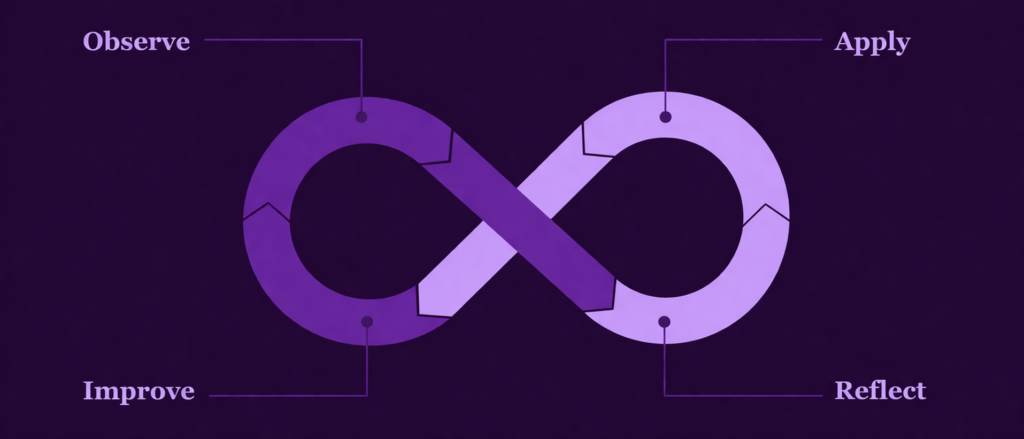
CLINFIN follows a spiral clinical learning approach – a model in which each day’s structured learning is immediately applied in real clinical setings. Theory and practice are not separated; they are woven together by design.
This cycle repeats continuously across the 12-week programme, reinforcing skills and deepening clinical reasoning with each iteration. Learning does not precede practice – it occurs through it.
Morning: Structured Learning Block
9:00 – 11:00 AM
Case-linked structured learning sessions focused on the clinical themes arising from the day’s patient cohort. Content is anchored to what trainees will encounter – not delivered in isolation.
Day: Full Clinical Immersion
11:00 AM – 6:30 PM
Supervised patient sessions across assessment, intervention, and review
Clinical documentation under supervisor guidance
Participation in multidisciplinary team (MDT) discussions
Structured end-of-day reflection and feedback
Clinical Responsibility Progression
At the heart of CLINFIN is a structured progression through levels of clinical responsibility. Trainees are not fast-tracked through stages – they advance only when they have demonstrated the competency required to do so safely and effectively
Stage 1 – Observer Structured observation of clinical sessions with guided reflection tasks
Stage 2 – Assisted Participan Active involvement in sessions under close supervisor direction
Stage 3 – Case Understanding & Guided Planning Formulating clinical reasoning and contributing to session planning with supervision
Stage 4 – Supervised Therapis Leading sessions with the supervisor present and providing oversight
Stage 5 – Semi-Independent Clinician Carrying primary responsibility for cases with structured supervisor review
Progression is based on demonstrated competency - not time alone. Participants advance when they are ready. Responsibility
increases gradually and safely, ensuring both patient wellbeing and trainee development
What Makes CLINFIN Different
CLINFIN is not structured around content delivery. It is structured around clinical responsibility – and that distinction shapes everything about how the programme operates.
1
Responsibility-Based Progression Trainees earn responsibility through demonstrated competency – they do not simply complete modules or accumulate hours
2
Early Clinical Exposure Real patient interaction begins early in the programme. There is no prolonged classroom phase before trainees engage with cases.
3
Longitudinal Case Learning Trainees follow cases across assessment, planning, intervention, and outcome – developing a complete clinical picture rather than isolated snapshots.
4
Mentored Apprenticeship Each trainee works under a dedicated, named supervisor who provides consistent oversight, feedback, and clinical mentorship throughout.
5
Competency-Based Certification Certification is not awarded on completion. It depends on clinical reasoning, case handling ability, and professional conduct – assessed rigorously.
6
MDT-Integrated Learning Exposure to multidisciplinary care enables trainees to understand integrated decision-making and apply structured thinking across disciplines and domains.
CLINFIN prepares therapists to work confidently across independent practice, small clinical setups, and complex multidisciplinary environments.
Programme Structure
12
Weeks
Full-time structured clinical apprenticeship
78
Clinical Days
Required for programme completion
5
Progression Stages
Competency-driven clinical responsibility levels
Batch & Selection
Intake is deliberately small-group to ensure meaningful supervision ratios and genuine clinical access for every participant. Entry is by application and suitability assessment -not on a first-come, first served basis.
Batch & Selection
Foundations of Clinical Practice
Developmental Conditions in Paediatric Rehabilitation
Assessment and Case Formulation
Goal Setting and Intervention Planning
Intervention Strategies Across Disciplines
Outcome Tracking and Professional Practice
Clinical Exposure
Clinical exposure in CLINFIN is structured to build competency 4 not simply accumulate hours. Every participant is actively engaged in real patient care from the programme’s early stages, with exposure designed to deepen progressively across the 12-week period.
Longitudinal Case Involvement
Each trainee follows 2-3 cases across the full arc of clinical care – from initial assessment through to goal review and outcome. This longitudinal model develops the depth of reasoning that brief exposures cannot.
Active Therapy Participation
Trainees do not observe from a distance. They participate in sessions – planning, executing, and reviewing interventions – under structured supervision appropriate to their current competency stage.
Parent Counselling & MDT
Engagement
Exposure extends beyond the therapy room. Trainees engage in parent counselling sessions and multidisciplinary discussions, building communication and collaborative reasoning skills essential in clinical practice.
Clinical exposure is designed to ensure competency development – not just attendance. Presence without engagement does not constitute clinical progress under the CLINFIN model
Supervision & Evaluation
Supervision is the backbone of the CLINFIN model. Every trainee is assigned a primary supervisor who maintains consistent oversight, provides structured feedback, and guides the progression of clinical responsibility throughout the programme.
Supervision Framework
Regular Observation Supervisors observe clinical sessions directly, providing real time and post-session feedback
Weekly Structured Review Supervisors observe clinical sessions directly, providing real time and post-session feedback
Progressive Independence Supervision is calibrated to the trainee’s stage – decreasing in intensity as competency is demonstrated
Continuous Evaluation
Evaluation is embedded into daily clinical practice – not reserved for a single assessment moment at the end of the programme
Daily Feedback Structured reflection and feedback following each clinical session
Weekly Progress Review Documented review of clinical reasoning and case handling
Stage-Wise Progression Checks Formal competency review before advancement to the next stage
Final Evaluation Includes:
Case presentation to supervisory panel
Clinical documentation review
Structured clinical reasoning discussion
Certification & Attendance
Certification under CLINFIN is awarded on the basis of demonstrated clinical competency – not programme completion alone. This distinction is central to the integrity of the qualification and to the standard CLINFIN upholds.
Certification Criteria
To be awarded a CLINFIN certificate of competency, all of the following must be met:
78 Clinical Days
Completed
Full attendance requirement met, or equivalent hours by arrangement
Competency
Demonstrated
Across all required clinical domains and progression stages
Supervisor Approval
Primary supervisor provides formal sign-off on clinical readiness
Attendance & Continuity Policy
The programme requires 78 clinical days (or equivalent hours) for completion. Continuity of attendance is essential to the integrity of longitudinal case learning
Absence Type
Outcome
Short absence
Programme extension considered
Extended absence
Individual review conducted
Significant disruption
Partial or full stage repeat required
All attendance decisions are made in alignment with competency progression – not applied as blanket administrative rules.
Not all participants will achieve certification. The standard is applied consistently and without exception.
Who Should Apply
CLINFIN is designed for therapists who are ready to move beyond observation and take on genuine clinical responsibility. Selection is based on professional eligibility, personal readiness, and alignment with the programme’s values
ELIGIBLE PROFESSIONS
Physiotherapists Newly or recently qualified, seeking structured paediatric clinical experience
Occupational Therapists Looking to build functional assessment and intervention competency in clinical settings
Speech & Language Therapists Seeking supervised exposure to developmental communication and feeding presentations
Within the first few years post-qualification, seeking to consolidate clinical skills
Open to Feedback and
Evaluation
Receptive to structured critique and willing to act
Seeking Real Clinical
Exposure
Learning by doing, not watching
Ready to Take Responsibility
Understands that clinical growth requires accountability, not just participation.
Not suitable for: Passive observers, candidates seeking certification without clinical engagement, or those unwilling to undergo structured evaluation
Career Pathway
CLINFIN is not a placement program.
However:
Provides high-visibility clinical exposure
Allows identification of high-potential therapists
High-performing participants may be considered for future opportunities within structured rehabilitation programs.
ABOUT NICE
CLINFIN is delivered under the auspices of the Nishta Centre of Excellence (NICE) – an organisation dedicated to advancing the quality, structure, and clinical integrity of developmental and rehabilitation care.
Advancing Developmental Care
NICE operates at the intersection of
clinical practice and systems thinking - building evidence-informed models for paediatric rehabilitation and developmental intervention
Building Clinical Systems
Beyond individual practice, NICE designs scalable, replicable clinical systems that ensure standardized, quality-driven, sustainable care across teams and settings.
Training Healthcare Professionals
NICE is committed to the professional
development of allied health practitioners - creating pathways that build competency, clinical reasoning, and sustainable practice
CLINFIN represents NICE’s commitment to addressing the gap between qualification and clinical readiness – not through coursework, but through supervised practice in a real, functioning clinical environment.
Apply for CLINFIN
If you are ready to move from:
From Learning → Doing.
From Observation → Responsibility.
Step 1 - Submit Application
Complete the CLINFIN application form
with your professional background and
clinical goals
Step 2 - Suitability Assessment
Shortlisted candidates are invited for a
structured suitability review with the NICE
clinical team
Step 3 - Selection & Onboarding
Selected participants are confirmed for the
next available intake and begin the
onboarding process
Get In Touch
Have questions about CLINFIN? Reach out to us – we would be happy to guide you through the program.
NICE Academy
New #30/3, Old #61/3, 3rd Main Road, Kasturba Nagar, Adyar, Chennai 600020